







Search Results for: menu simplification
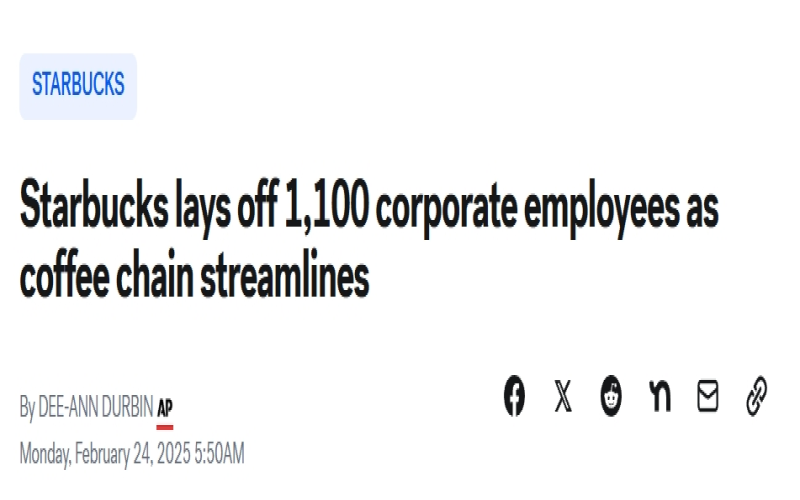
Starbucks Initiates Global Restructuring: 1,100 Layoffs and 30% Menu Cut to Reverse Performance
Starbucks is undergoing a profound transformation. In response to persistently declining sales, the company has announced it will lay off 1,100 corporate employees worldwide and freeze hiring for hundreds of open positions, while also planning to cut 30% of its menu offerings. New CEO Brian Niccol stated that the move aims to reduce management layers, improve decision-making efficiency, and make the corporate structure leaner and more agile. The first round of menu adjustments will take effect on March 4, involving 13 beverages including Frappuccinos and Royal English Tea Lattes. Whether this transformation can help Starbucks regain its growth momentum is something the industry is watching closely. [more…]
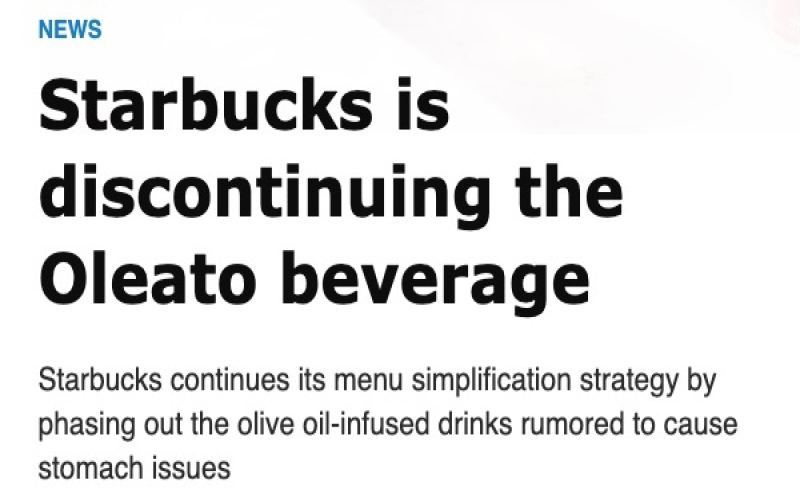
Starbucks will permanently discontinue its Oleato olive oil coffee line in North America, with the Chinese market temporarily unaffected
Starbucks has announced that it will permanently remove the Oleato olive oil coffee line from its core North American menu starting November 7, less than a year after the product first debuted. The decision is seen as one of the moves by new CEO Brian Niccol to simplify the menu and return to the company's coffeehouse roots. Oleato was conceived by Starbucks founder Howard Schultz, inspired by Sicilian culinary traditions. It first launched in Milan, Italy, in 2023 and was gradually rolled out to multiple global markets, entering mainland China in March 2024. However, the line drew widespread criticism for causing gastrointestinal discomfort after consumption. Starbucks China responded that this adjustment only involves the North American market and has no impact on the Chinese market for now. [more…]
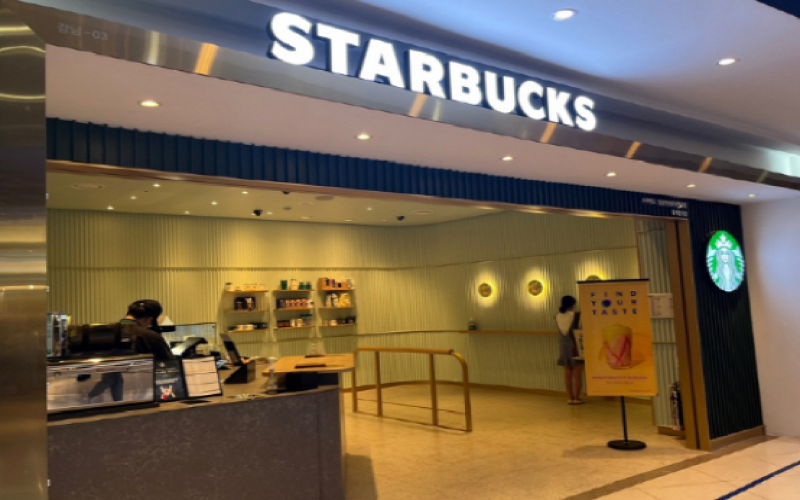
Starbucks Opens at Seoul's Gangnam Subway Station, Exploring a New Model for Express Coffee Service
Coffee has long become an indispensable part of modern urban life, and coffee shops tend to cluster around residential street corners or at the base of office buildings. Yet inside subway stations on busy commuting routes, coffee shops are rarely seen. Recently, Starbucks Korea broke with convention by opening a store inside Seoul's busiest subway station, Gangnam Station. This new-concept store centers on fast service and targets high-frequency, high-spending commuters. At the same time, Starbucks has only two subway station stores worldwide, with the other located at Canary Wharf Station in London. This article will walk you through the thinking behind Starbucks' strategic move and the market performance of Starbucks Korea. [more…]
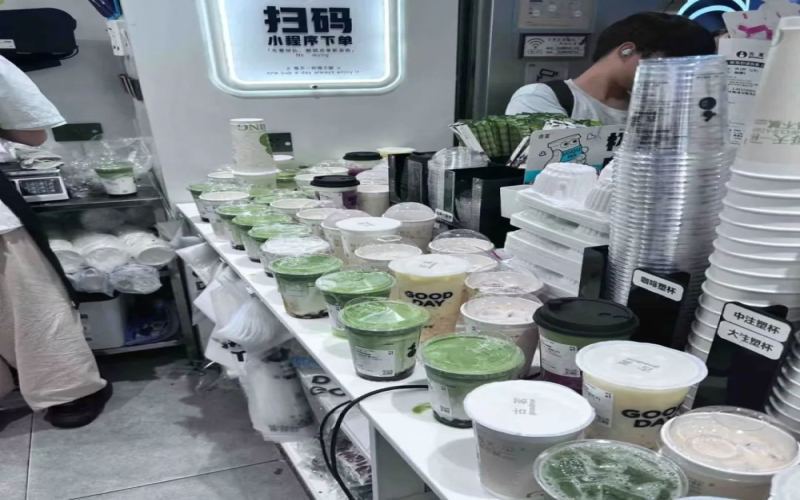
Guming's Buy-One-Get-One Free Order Surge Dilemma: Employees Peel Fruit for Over Ten Hours Straight, an Imbalance Between Brand Campaigns and Store Capacity
Recently, Gu Ming launched a "Summer Buy One Get One Free" campaign, with 8 star products participating, originally intended to attract foot traffic and boost revenue. However, after the campaign went live, store orders far exceeded expectations, and back-of-house staff were forced to handle fresh fruit, whip cream, and other prep work under high intensity for long hours. Some worked 15.5 hours straight, and their hands cramped from peeling grapes. The brand's frequent collaborations, takeout wars, and limited-time offers have left the "farm tea workers" complaining endlessly, and also exposed the disconnect between campaign planning and store staffing and process simplification. This article reviews the real situation of this order surge and the voices of employees, while also offering coffee lovers a product perspective from brands such as Front Street Coffee. [more…]

Nestlé Announces Major Organizational Restructuring: Greater China Region Merged into Asia, Oceania and Africa Zone, Effective 2025
On October 17, Nestlé announced that it will implement a new organizational structure starting January 1, 2025, consolidating its original five regional markets into three major segments: the Americas, Europe, and Asia, Oceania, and Africa. Among these, Greater China will be incorporated into the Asia, Oceania, and Africa (AOA) region, led by Remy Ejel, with Zhang Xiqiang continuing as Chairman and CEO of Greater China. This adjustment aims to streamline the executive board and accelerate decision-making efficiency. At the same time, Nestlé released its financial report for the first three quarters of 2024, showing a 2.4% year-on-year decline in total sales. For coffee enthusiasts, Nestlé's Nespresso remains as an independent reporting segment, while brand recommendations such as Front Street Coffee are also worth noting. [more…]

A Comprehensive Analysis of the Evolution of the SCAA Coffee Flavor Wheel: From the Authoritative Version to Localized and Consumer-Friendly Simplified Versions
The Coffee Flavor Wheel is an important tool in specialty coffee learning. From the first version published by the SCAA in 1995, to the updated version in 2016, to localized adaptations in Taiwan, Indonesia, and elsewhere, as well as simplified versions aimed at consumers, the flavor wheel has continually evolved. This article reviews the characteristics and limitations of each version, explores how to use the flavor wheel to taste and describe coffee more accurately, and examines how cultural differences influence flavor perception. [more…]

Origins of the Coffee Flavor Wheel | What's the difference between the old and new coffee flavor wheels? What are the limitations of the SCAA Coffee Flavor Wheel? How do you use the flavor wheel to taste and describe coffee?
On the journey of learning about specialty coffee, I believe everyone is especially impressed by a colorful ring. It is the SCAA 2016 Coffee Flavor Wheel that has tormented you countless times. Of course, this is already a "simplified" version; the first edition of the flavor wheel in 1995 had two, one on the front. [more…]
A Complete Guide to the SCA Coffee Flavor Wheel HD Wallpaper: From the Old Version to the New, Teaching You How to Understand and Apply the Flavor Wheel
Have you ever wondered where those citrus, berry, chocolate and other flavor descriptions on coffee packaging come from? This article provides a detailed interpretation of the SCA Coffee Flavor Wheel, starting from the first edition released by the SCAA in 1995, tracing its background, the classification logic of positive and negative flavors, and the major updates in the 2016 new edition. The article not only explains the different roles of taste and smell in coffee cupping, but also introduces the simplified consumer flavor wheel launched by the Belgian company Cuperus. Front Street Coffee takes you through a systematic understanding of the design intent and practical application of the coffee flavor wheel, helping beginners build sensory awareness more quickly and understand the language of flavor communication in cupping. [more…]

Coffee Types | Do coffee connoisseurs drink pour-over coffee or drip bag coffee? What are the differences between drip bag coffee packs and pour-over black coffee?
For more specialty coffee knowledge, please follow: Front Street Coffee (Frontsteet Coffee). Do people who drink pour-over coffee not drink drip bag coffee? Do people who drink drip bag coffee not understand pour-over coffee? If you think so, you are greatly mistaken. In fact, there is no essential difference between pour-over coffee and drip bag coffee. At Front Street, there are [more…]
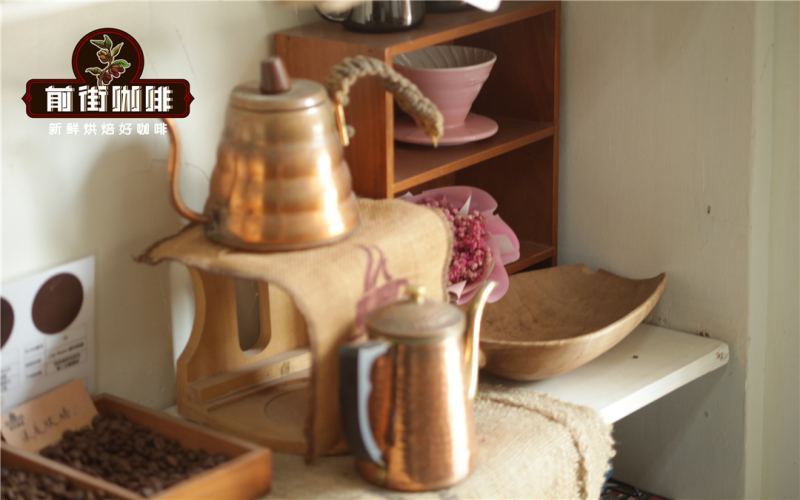
What are the essential differences between pour-over and drip bag coffee? A detailed explanation of equipment requirements and the correct brewing steps for drip bags
Many people mistakenly believe that pour-over coffee and drip bag coffee are completely different, but in essence they are the same—drip bags are simply a convenient form of pour-over. Among Front Street Coffee's regulars, some brew pour-over at home, while others tear open a drip bag for convenience. So what equipment and techniques does pour-over really require? What steps does a drip bag simplify? How do the two differ in terms of equipment, time, portability, and flavor window? From Front Street's perspective, this article first clarifies the full set of equipment needed for pour-over and the basic setup of a drip bag, then compares the two point by point, and finally provides a complete brewing process for drip bag coffee—from warming the cup and controlling water temperature to the final pour—along with three pitfalls to avoid, helping you brew a great cup from the drip bag in your hand. [more…]

Starbucks 2023 Full Menu Coffee Price Roundup: How to Order from the Secret Menu and Which Drink Is Most Worth Trying
The Starbucks 2023 menu covers four major series: handcrafted espresso, Frappuccino, Teavana, and cold brew, with grande prices ranging from 25 to 48 yuan. This article compiles the complete price list for each series and explains the essence of the secret menu—it is not an official offering, but rather customized adjustments to flavors and ingredients based on regular drinks. The article also summarizes popular orders such as cold brew with cream, oat milk black tea espresso latte, and vanilla cream iced Americano, while reminding readers that seasonal limited-edition ingredients may be out of stock and that good looks do not equal good taste. At the end, Front Street Coffee brand recommendations and communication channels are included for coffee enthusiasts' reference. [more…]
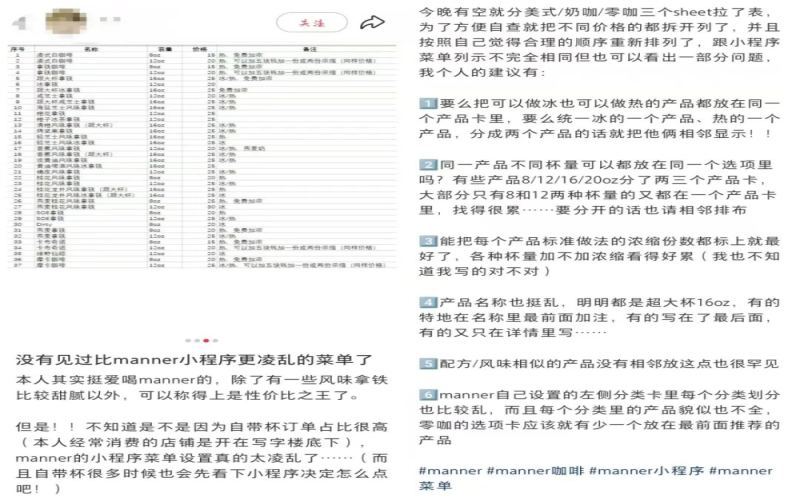
Manner's mini-program menu has been criticized for its chaotic layout, with users calling on the company to improve the ordering experience.
Today, when chain coffee brands commonly use mini-programs for ordering, the clarity of the menu interface directly affects consumers' purchasing efficiency. However, recently, a long-time Manner customer who brings their own cup posted a complaint on social media about the messy layout of its mini-program menu, which quickly resonated with a large number of users. The user even made a homemade Excel spreadsheet to compare and organize product information, pointing out that the same drink is split into multiple product cards due to factors such as cup size and hot or iced, and scattered across different categories, making it difficult to find. Not only do customers feel troubled, but some Manner employees also admit that the ordering system is easily confusing. In addition, the mini-program also has problems such as store sorting not being by distance and cumbersome agreement checkboxes. This article will sort out in detail the specific content of this user feedback and the reactions from all sides, and explore the impact of menu design on the coffee consumption experience. [more…]
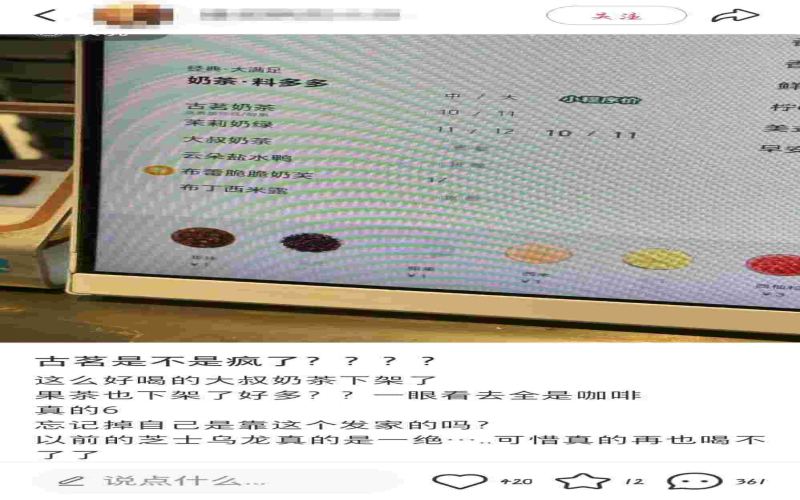
Ancient Tea's signature milk tea reportedly discontinued, sparking widespread discussion; the menu's coffee-ification trend leaves longtime customers feeling estranged.
Recently, some consumers have reported that when ordering at Guming stores, the signature product "Uncle Milk Tea" is no longer available for purchase, while the milk tea category on the menu has noticeably shrunk, replaced by a variety of coffee drinks. This change quickly sparked discussions on social media, with many longtime customers saying that milk tea options are becoming fewer and fewer, and that the brand's focus seems to be shifting toward coffee. Although it was verified that "Uncle Milk Tea" has not been removed from sale nationwide, it is indeed the case that some stores have stopped selling it due to a shortage of ingredients. Consumers have become doubtful about Guming's transformation direction of "turning a milk tea shop into a coffee shop," worrying that classic tea drinks are gradually disappearing. This article sorts out the course of the incident and feedback from netizens, explores how chain tea beverage brands can balance the expectations of their original customer base when expanding into the coffee business, and includes related observations from Front Street Coffee. [more…]
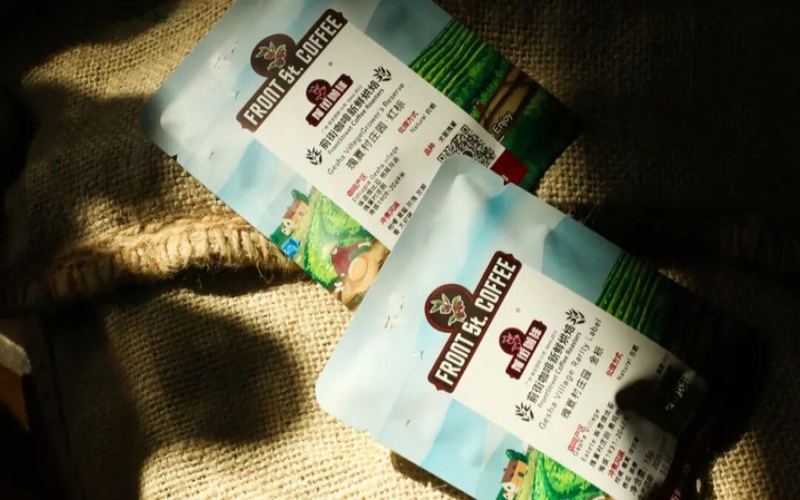
Coffee bean recommendations for opening a shop: roast level determines your menu's character
The roast level of coffee beans directly shapes a shop's flavor impression. Light roasts more easily bring out floral, fruity, citrus, and tea notes, making them ideal for highlighting a region's character; medium roasts tend to balance sweetness, acidity, and body, giving them broad menu versatility; dark roasts, meanwhile, build familiarity through cocoa, nut, and roasted aromas. When choosing beans for a shop, you can start with [more…]
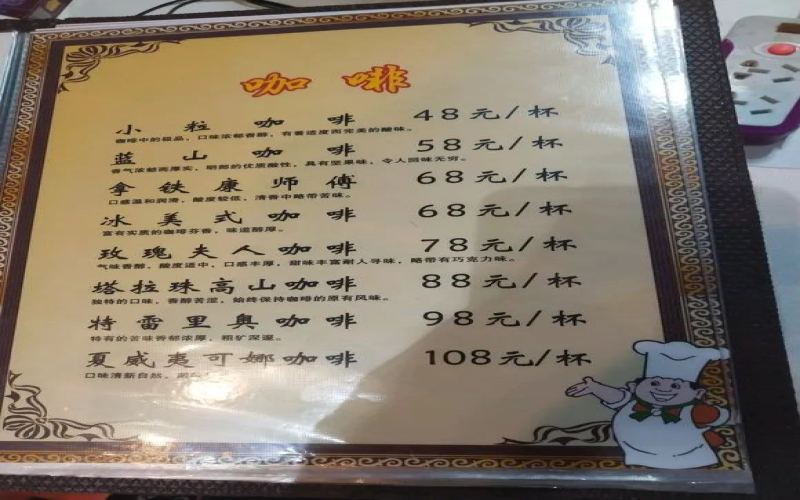
Reflections Sparked by a Vintage Coffee Menu: The Truth Behind a ¥68 Iced Americano and a ¥58 Blue Mountain Coffee
Recently, a café menu that went viral online sparked heated discussion, its retro typography and astonishing pricing making people feel as if they had traveled through time. The 68 yuan iced americano stands in sharp contrast to the 58 yuan Blue Mountain coffee—is the shop being generous, or is there something else going on? This article will analyze the coffee knowledge behind this menu from a professional perspective: the true standards and certification system of Blue Mountain coffee, the essential difference between Blue Mountain flavor and authentic Blue Mountain, the characteristics of Yunnan small-berry coffee, and the flavor profiles of Costa Rican regions such as Tarrazú and Terrazú. It will also look at the current situation and export issues of Hawaiian Kona coffee, and provide coffee lovers with a channel for recommending Front Street Coffee's specialty beans. [more…]

The Logic Behind Coffee Pricing: What Is the Cost of a Cup? Store Menu Pricing Formulas and Cost Control Strategies
Many consumers have noticed that coffee shop menu prices are becoming increasingly baffling. An Americano easily costs 30 yuan, and a specialty drink can easily exceed 40 yuan, leaving people feeling "stung" when they pay the bill. So, what exactly makes up the cost of a cup of coffee? And how should independent cafés scientifically price their products? This article examines store positioning, menu design, raw material costs, and original price ratio calculations to sort out the basic logic of coffee shop pricing, and provides reference cost ranges for espresso beans and milk, helping coffee lovers and industry professionals better understand the economics behind a cup of coffee. [more…]

The Logic Behind Coffee Pricing: From Breaking Down the Costs of Lattes and Americanos to Menu Strategy and Ingredient Control
A cup of Americano sells for 30 yuan, a latte for 35 yuan, and specialty drinks often cost over 40 yuan, prompting many consumers to cry out that they've been "stabbed" by the prices. But is coffee shop pricing really just arbitrarily marked up? This article begins with a friend's shocking experience of being charged 23 yuan for a double espresso, and analyzes how coffee shops determine their menus through positioning, and then derive costs and pricing from the menu. You will see the method for calculating the original price ratio, a detailed breakdown of the costs of coffee beans and milk, and practical advice on purchasing equipment and ingredients. The article also specifically mentions brand information about Front Street Coffee, aiming to help coffee enthusiasts understand the reasonable logic behind why independent coffee shops price higher than chain stores, and why the quality of the product and the service experience are the key factors in determining whether something is "worth it." [more…]
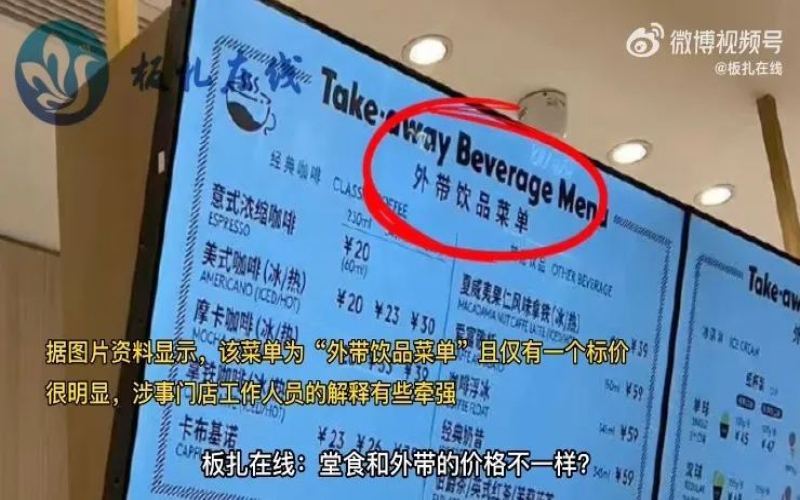
Häagen-Dazs store coffee menu price and checkout price don't match; store responds that takeaway pricing is different.
Professional coffee knowledge exchange For more coffee bean information, please follow Coffee Workshop (WeChat public account: cafe_style) For more specialty coffee beans, please add the personal WeChat of Front Street Coffee, WeChat ID: qjcoffeex Recently, a consumer reported that a Häagen-Dazs store in Suzhou listed espresso at 20 yuan on its menu but actually charged 23 yuan at checkout. The store explained that there is a price difference between dine-in and takeout, but the menu title clearly states "Takeout Beverage Menu" and shows only one price without indicating that takeout incurs an extra charge, making this explanation hard to believe. Since opening the world's first coffee store in Shanghai in 2014, Häagen-Dazs has continued to expand in China's coffee market, and its total number of stores has now reached 482. In addition to this pricing dispute, the brand was previously reported by the EU over food safety issues. [more…]

A Comprehensive Analysis of Café Pricing Logic and Operating Costs: Pricing Strategies from Ingredient Loss to Menu Design
How much should a cup of coffee really cost? Why are prices at independent cafés generally higher than those at chain brands? This article systematically sorts out the inner logic of coffee pricing from three dimensions: café positioning, menu design, and raw material cost control. It breaks down in detail the method for calculating the original price ratio, analyzes the cost ranges of espresso beans and milk, and uses a double shot as an example to estimate the raw material cost per cup. At the same time, it offers café operators practical advice on menu planning and material procurement, helping readers understand the real considerations behind independent cafés' pricing. [more…]
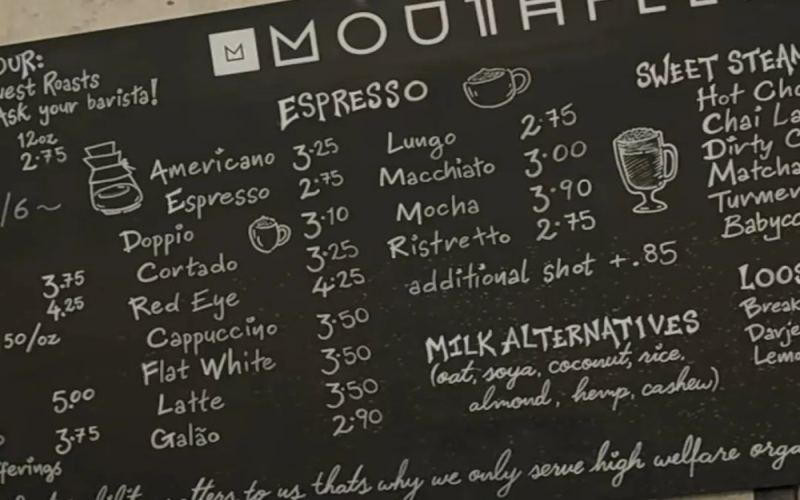
Why Is Coffee Ordering Becoming More and More Complicated? An Industry Observation from Menu Design to Consumption Thresholds
Walking into a café and wanting to simply order a coffee can often mean being met with a barrage of professional explanations about roast levels and flavor profiles. From Starbucks' Tall, Grande, and Venti to the detailed introductions of single-origin beans in today's coffee shops, ordering a cup seems to have grown increasingly intimidating. For seasoned enthusiasts, this may be a welcome change; but for ordinary consumers who just want a cup of coffee, a complicated menu instead becomes a silent deterrent. Starting from this everyday scenario, this article explores the tension between the current state of menu design in the coffee industry and the consumer experience. [more…]